-
Mangrove Charcoal |
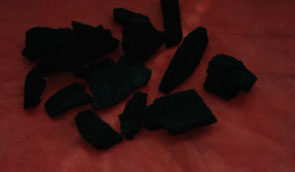
Mangrove
Charcoal is one of the hardwood charcoals and also one of
the heaviest charcoals. In other words, its structure is
very dense and also hard. This charcoal is used for BBQ
in restaurants, outdoor picnic charcoal packs, and some
industrial fields like non-ferrous metal production. One
advantage of this charcoal is that it gives a special
aroma to BBQ when burning. There are two types of
Mangrove Charcoal, Trunk and Branch. The difference
between Trunk and Branch, as you can imagine from the
words, is that Trunk has bigger irregular lump shape,
while Branch has rather regular cylinderical shape with
enhanced handling.
* Application: pencil, tyre, black
paint, toner, active carbon base, fuel, BBQ, restaurants,
etc. |
| |
|
| SPECIFICATION |
* Moisture: 5-7%
* Volatile matter: 15-20%
* Ash: 3%
* Fixed carbon: 70-80%
* Calorific value: 7,085 kcal/kg
* Packing: 20kg/carton box or your choice |
| |
|

- Hardwood
Charcoal |
Hardwood
Charcoal usually refers to charcoal of one or mixed
jungle wood. It is also called Lump Charcoal or Lumpwood
Charcoal in a different point of view. Main use of this
charcoal is BBQ but bulk quantity is often used for
industrial purposes as well.
* Application: pencil, tyre, black
paint, toner, active carbon base, fuel, BBQ, restaurants,
etc. |
| |
|
| SPECIFICATION |
*
Moisture: 5-7%
* Ash: 2-3%
* Volatile matter: 10-15%
* Fixed carbon: 80-85%
* Calorific Value: 7000-7500 kcal/kg
* Packing: 20kg/pp woven bag or your choice |
| |
|
- Black Oak
Charcoal |
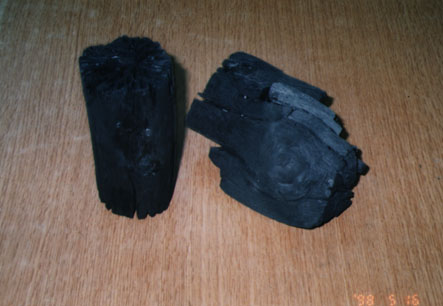
Black
Oak Charcoal is usually used in BBQ restaurants and in
industrial fields. This charcoal along with White Oak
Charcoal is usually recognized in several Asian countries
like Korea, Japan, and China. Since it is not as fully
finished (see the explanation below) as White Oak
Charcoal, it is called 'Black' Charcoal. Oak tree used to
be a good source of charcoal in Asian countries but now
the production is quite limited. Meanwhile South East
Asian Wood Charcoals are replacing it with the lower
prices.
* Application: pencil, tyre, black
paint, toner, active carbon base, fuel, BBQ, restaurants,
etc. |
| |
|
| |
*
Moisture: 5-7%
* Ash: 2-3%
* Volatile matter: 5-10%
* Fixed carbon: 80-85%
* Calorific Value: 7000-7500 kcal/kg
* Packing: 20kg carton box |
| |
|
- White Oak
Charcoal |
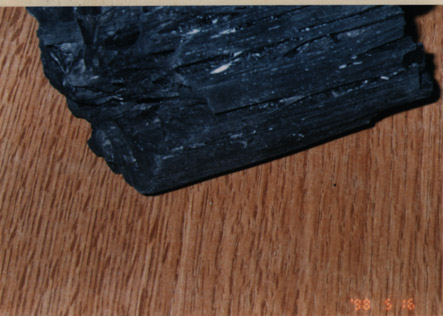
White Oak
Charcoal has white-ash-covered surface and this is why it
is called 'White Charcoal'. At the final stage of
carbonization, the kiln is partly opened to induce active
burning, and then the charcoal is taken outside to
extinguish with sand and ash mixture. Advantages of white
charcoal are that it has much less smoke and fumes due to
the final treatment, while the price is quite expensive.
Now only a few Asian countries have the market, and the
main market lies in prestigious restaurants, which use
the very best sources to keep their reputation. Compared
with Black Oak Charcoal, this is considered as a
superior, showing more competitive aspects in burning
quality and less smoke.
* Application: pencil, tyre, black paint, toner, active
carbon base, fuel, BBQ, restaurants, etc. |
| |
|
| |
*
Moisture: 5-7%
* Ash: 2-3%
* Volatile matter: 5-10%
* Fixed carbon: 85-90%
* Calorific Value: 7000-7500 kcal/kg
* Packing: 20kg carton box |

